
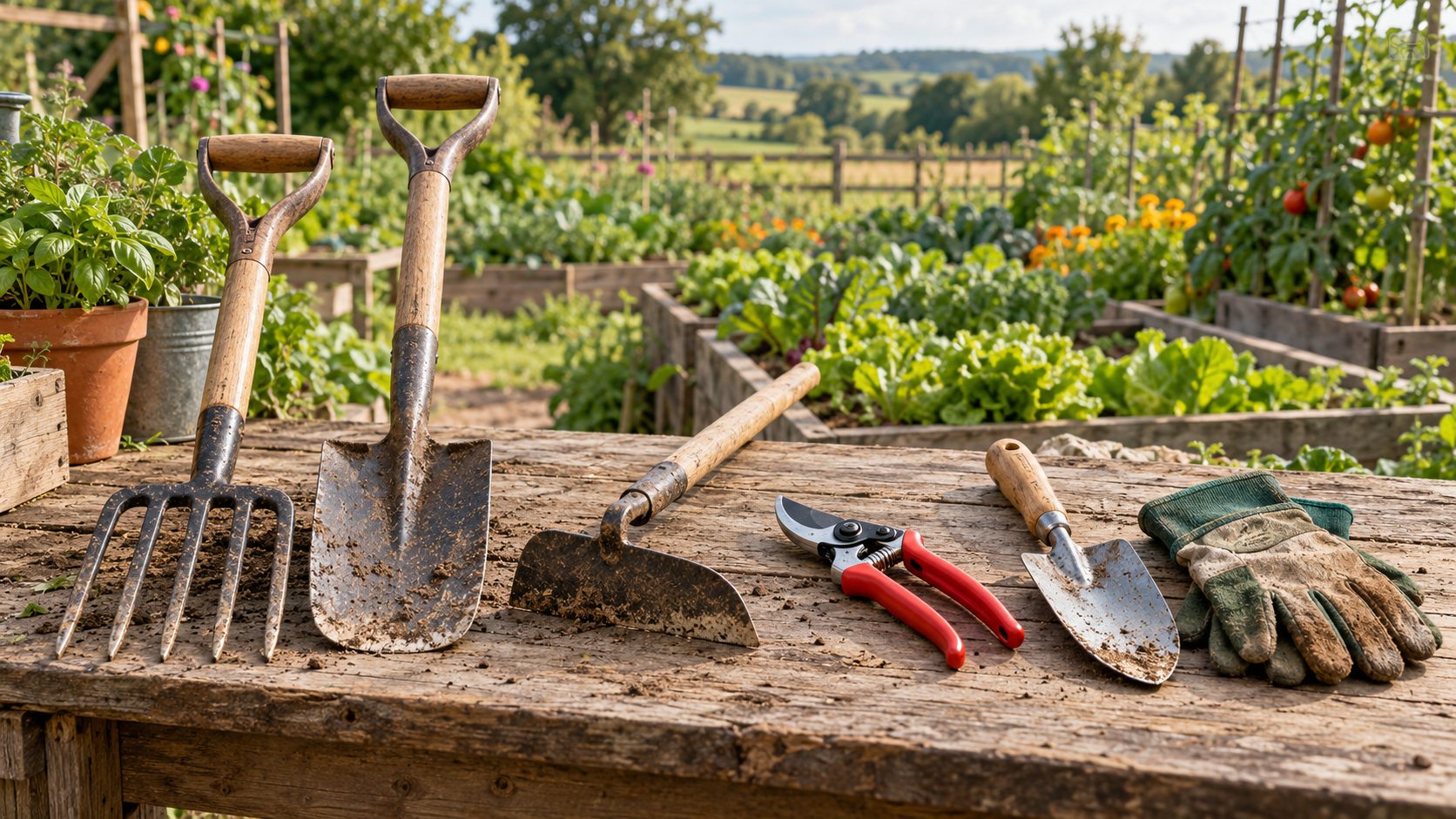
Essential small farm hand tools: your first kit
The essential hand tools for a small farm to buy first are a round-point shovel, a digging fork, a weeding hoe, a bow rake, hand pruners, a harvest knife, a hand trowel, a wheelbarrow or garden cart, a hose with a watering nozzle, and a sharpening file. This minimum kit covers the core jobs: digging, preparing beds, weeding, harvesting, moving material, watering and maintenance.
Buy these first and work with them for a full season. Add specialist tools only when a real bottleneck appears. This guide is for small farmers and market gardeners in the US, UK, Canada and Australia, and it focuses on practical choices rather than brand names.
Minimum Viable Equipment by Task
Use this table to set your buying order. “High” means buy before your first planting.
Choose by Farm Type
Your crops change the list. Adjust the core kit like this:
Market Garden
Prioritise the hoe, rake and harvest knife. Consider a broadfork and wheel hoe once your beds are established.
Orchard or Perennials
Put pruners first, then add loppers and a pruning saw. A sturdy spade helps with planting trees.
Livestock Homestead
Add a manure fork, a square shovel and a reliable cart. Fencing pliers become essential quickly.
Tool Quality and Ergonomics
Cheap tools often bend or snap at the joint between head and handle. Look for:
- Forged or solid-socket heads rather than thin stamped steel.
- Handles sized to your height, so you work without hunching.
- Comfortable grips, especially for pruners you use for hours.
- Replaceable parts, such as pruner blades and springs.
Washington State University Extension offers practical advice on choosing and caring for garden tools, which is a useful checklist before buying.
Simple Maintenance Routine
- After each use: knock off soil and dry metal parts.
- Weekly in season: sharpen hoe blades and pruners.
- End of season: oil metal, sand rough wooden handles and treat them with linseed oil.
- Storage: hang tools off the floor in a dry shed.
Clean pruners between plants when you are dealing with disease, to reduce the risk of spreading it.
When to Upgrade
Upgrade when a tool limits your work, not because a new one looks appealing. Common triggers include:
- Weeding takes longer than planting, which suggests a wheel hoe.
- Compacted beds slow your soil prep, which suggests a broadfork.
- Harvest days run long, which suggests better knives, crates or a larger cart.
- You keep replacing the same tool, which suggests a higher-quality version.
For a longer roadmap, The Market Gardener’s list of 30 must-have tools for small regenerative farms shows what growers often add as they scale.
FAQ
Should I buy a tool set?
Usually not. Sets often include tools you won’t use. Buy individual tools matched to your tasks.
Spade or shovel first?
A round-point shovel is more versatile. Add a spade if you dig straight edges or plant trees.
Do I need a tiller?
Not to start. Many small growers manage beds with a fork, a broadfork and a rake.
Summary and Next Step
Start with ten reliable tools covering digging, weeding, harvesting, hauling, watering and sharpening. Next step: list your weekly tasks, match each one to a tool in the table, and buy only what fills a gap.
Related tool planning
Review the raised-bed market-garden kit for a specific vegetable workflow. Keep purchases useful with the seasonal hand-tool maintenance checklist.
Leave a Reply